






In a world filled with complex medical advice and quiet anxieties about the future, the idea of managing your health can feel overwhelming. It’s easy to believe that a vibrant, healthy life is too complicated or out of reach. But what if the path to a resilient heart wasn’t a race, but a practice of gentle cultivation? We believe that proactive heart care is a foundational journey of alignment-one that begins not with fear, but with clarity and confidence.
This guide is your companion on that journey. Here, we will strip away the complexity and provide a clear, sustainable framework for lasting cardiovascular wellness. You will discover simple, actionable steps to nourish your body, find calm for your mind, and cultivate a spirit of vitality. It is time to move from uncertainty to empowerment, building the foundation for a life you can truly thrive in.
Your cardiovascular system is the body’s most essential transport network, a sophisticated web of arteries and veins with the heart at its vibrant center. Its primary purpose is profound yet simple: to deliver life-sustaining oxygen and nutrients to every cell, tissue, and organ. Understanding the basic Anatomy of the Heart reveals a marvel of biological engineering designed for endurance. True heart health, therefore, isn’t merely the absence of disease. It is a state of optimal efficiency and resilience, where your heart works in seamless alignment with your body.
Embracing proactive heart care is about cultivating this strength from the ground up. It’s a foundational practice focused on nourishing your vitality for the long term, rather than simply reacting to common conditions like hypertension or high cholesterol. This is where your wellness journey truly begins.
Cardiovascular health refers to the optimal functioning of your heart and blood vessels. Think of it as the well-maintained engine of your body, performing its duties with quiet power and precision. When this system is in peak condition, blood flows freely, your heart muscle is strong, and your risk of major events like heart attack and stroke is significantly reduced. It is the very bedrock of physical energy and mental clarity.
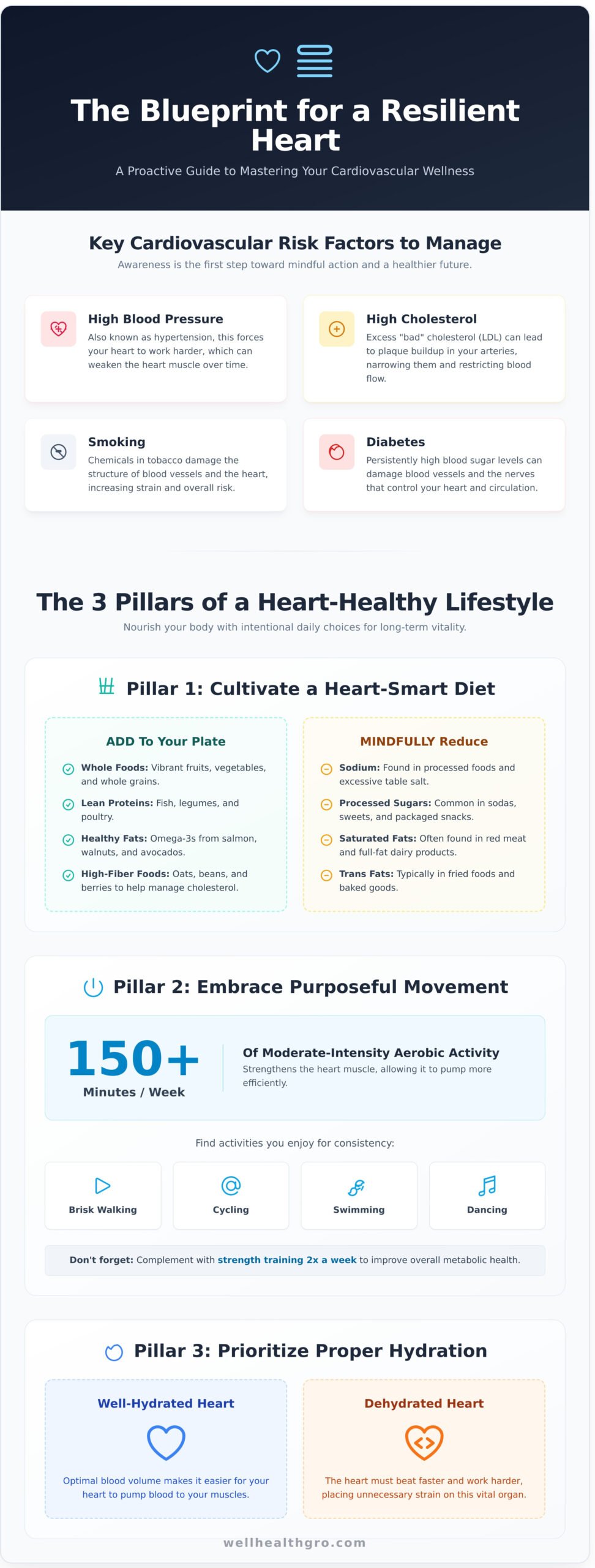
Knowledge is the first step toward empowerment on your health journey. Understanding the factors that can strain your cardiovascular system allows you to make conscious, supportive choices. Awareness of these elements is not a cause for fear, but a call to mindful action.
While we cannot change non-modifiable factors like age or family history, focusing on what we can influence is the cornerstone of effective heart care. By addressing these key areas, you actively participate in building a more resilient cardiovascular future.
Your daily choices are the most powerful tools you possess for cultivating long-term heart health. This journey is not about restriction; it is about intentional nourishment. The foundational pillars of diet, movement, and hydration work in synergy, creating a resilient cardiovascular system. A heart-smart diet directly helps manage blood pressure and cholesterol, while consistent physical activity strengthens the heart muscle, allowing it to pump more efficiently with every beat.
Focus on what you can add to your plate. Build your meals around whole foods: vibrant fruits and vegetables, lean proteins like fish and legumes, and complex carbohydrates from whole grains. Incorporate healthy fats rich in omega-3s, found in salmon and walnuts, and embrace fiber to help manage cholesterol. At the same time, mindfully reduce your intake of sodium, processed sugars, and saturated fats. A simple swap, like choosing sparkling water over soda, can make a significant impact.
Purposeful movement is a direct investment in your heart’s strength. The American Heart Association recommends at least 150 minutes of moderate-intensity aerobic activity per week. This can be achieved through activities you genuinely enjoy, ensuring consistency becomes second nature.
Complement your aerobic exercise with strength training twice a week to improve overall metabolic health and support your cardiovascular system.
Proper hydration is a simple yet critical component of effective heart care. When you are well-hydrated, your blood volume is optimal, making it easier for your heart to pump blood to your muscles. Dehydration forces the heart to beat faster and work harder, placing unnecessary strain on this vital organ. Keep a water bottle nearby and sip throughout the day to support seamless heart function. This integrated approach is central to building your vitality from the ground up, a concept supported by leading health organizations. The National Heart, Lung, and Blood Institute offers a comprehensive guide to Heart-Healthy Living that reinforces how these daily practices create a strong foundation for your well-being.
True cardiovascular wellness extends beyond diet and exercise. It grows from a place of deep alignment between mind and body. Your emotional state directly influences your physical heart, making mental well-being a foundational, non-negotiable pillar of comprehensive heart care. Chronic stress and poor sleep are not just lifestyle inconveniences; they are significant risk factors that can silently undermine your cardiovascular system over time. To truly thrive, we must nourish our emotional resilience with the same intention we bring to our physical health.
When you perceive a threat, your body’s ‘fight or flight’ response floods your system with stress hormones like adrenaline and cortisol. This is a brilliant survival mechanism, but when activated chronically, it forces your heart to work overtime, elevating blood pressure and promoting systemic inflammation. The key is to cultivate practices that actively soothe this response. Integrating stress-reduction techniques is a key part of Proactive Heart Health, empowering you to manage your body’s internal state before it becomes a chronic issue. Consider these tools:
Sleep is not a passive state-it is a critical period of restoration for your entire cardiovascular system. During deep sleep, your blood pressure and heart rate naturally dip, giving your heart and blood vessels a vital opportunity to repair and recover from the day’s demands. Consistently poor sleep, or conditions like sleep apnea, disrupt this restorative cycle, keeping your body in a state of high alert and increasing your risk for hypertension, heart attack, and stroke. Optimizing your sleep is a powerful form of preventative heart care. To cultivate better rest:
Taking ownership of your health journey is one of the most empowering steps you can take. When it comes to your cardiovascular wellness, knowledge is truly power. Think of key health metrics not as judgments, but as a personal report card for your heart-clear, objective data that shows you where you thrive and where you can cultivate growth. Understanding these numbers is a foundational aspect of proactive heart care, transforming abstract health goals into tangible, trackable progress.
Remember, these numbers are not your destiny; they are your data. With mindful lifestyle adjustments and consistent tracking, you can guide them toward optimal alignment, building a stronger, more resilient foundation for your future.
Your blood pressure reading provides a real-time snapshot of the force of blood pushing against your artery walls. It’s composed of two numbers: systolic (the top number), measuring pressure as your heart beats, and diastolic (the bottom number), measuring pressure as your heart rests. A healthy reading is typically below 120/80 mmHg. Consistent readings of 130/80 mmHg or higher may indicate hypertension, a condition that requires careful management. Regular monitoring, whether at home or in a clinic, is essential for awareness.
Cholesterol is a waxy substance in your blood that your body needs, but an imbalance can lead to problems. A lipid panel test measures several key components to assess your risk:
For most adults, aiming for a total cholesterol level below 200 mg/dL is a healthy target.
The connection between blood sugar and heart health is direct and significant. Chronically high blood sugar levels can damage blood vessels and the nerves that control your heart. This condition, often linked to insulin resistance, is a major risk factor for cardiovascular disease. Regular screening is a crucial part of comprehensive heart care, especially if you have a family history of diabetes or other risk factors. Managing your blood sugar is not just about preventing diabetes-it’s about actively protecting your heart for years to come.
Your health journey is a process of cultivation, and every successful journey has a trusted guide. A medical professional is not just a problem-solver but a vital partner in your pursuit of wellness, helping you navigate the complexities of your cardiovascular system. For specialized heart care, a cardiologist is your dedicated expert, offering the clarity and direction needed to build a foundational strategy for a thriving, vibrant life.
Listening to your body is the first step toward proactive health. Certain signs should never be ignored, as they are your body’s way of signaling a need for attention. We encourage you to seek professional guidance promptly if you experience:
Furthermore, regular check-ups are essential if you have known risk factors like a family history of heart disease or high blood pressure. Don’t wait for symptoms to arise. Prioritize your heart health and seek professional advice.
In today’s world, accessing expert heart care has never been more seamless. Telehealth removes traditional barriers, allowing you to connect with a specialist from the comfort of your own home. This modern approach means no travel, minimal waiting, and a relaxed environment for your health conversation.
During a virtual consultation, you can expect a comprehensive discussion of your health history and symptoms, culminating in a personalized care plan. This makes proactive and follow-up appointments easier to manage, empowering you on your path to optimal health. Take the next step by scheduling an online cardiology consultation.
Embracing a proactive approach to your health means understanding that cardiovascular wellness is a holistic pursuit, cultivated through nourishing foods, consistent movement, and a mindful awareness of the mind-heart connection. This foundational knowledge is the first step, but true optimization in your heart care journey often flourishes with expert guidance, transforming intention into sustainable results.
You do not have to walk this path alone. With Well Health Gro, you gain access to experienced, compassionate cardiologists who design personalized treatment plans tailored to your unique needs. Experience a new standard of convenient, high-quality care from the comfort of your home. Take the first step towards a healthier heart. Book your online consultation today.
Your journey toward a thriving, resilient heart begins now.
The single most foundational step you can take is to cultivate consistent movement. This doesn’t mean punishing workouts; instead, focus on integrating joyful activity into your daily rhythm, like a brisk 30-minute walk. This simple practice nourishes your entire cardiovascular system, improving blood flow, managing weight, and strengthening your heart muscle. It is a powerful commitment to your long-term vitality and a cornerstone of proactive heart care.
While a complete reversal is complex, significant lifestyle changes can halt and even improve many aspects of heart disease. By nourishing your body with whole foods, managing stress, and embracing regular movement, you can lower blood pressure and reduce cholesterol. These actions work in powerful synergy with medical guidance, creating a foundational strategy to reclaim your cardiovascular health and cultivate a more resilient future. It’s about progress, not perfection.
For optimal wellness, we recommend a proactive rhythm for screenings. Healthy adults over 20 should have their cholesterol checked every 4-6 years. Blood pressure is a more frequent check-in; aim for at least once every two years starting at age 18, and annually if your numbers are elevated. These simple measurements provide crucial insight, empowering you and your healthcare partner to make informed decisions for your heart’s alignment and long-term health.
The journey of dedicated heart care begins now. Rather than waiting for a specific age, we encourage cultivating heart-healthy habits in your 20s and 30s to establish a powerful, foundational baseline for lifelong vitality. Think of it not as a reaction to aging, but as a proactive investment in your future self. By nourishing your body early, you build resilience and create a sustainable path for a thriving, energetic life for decades to come.
Understanding the distinction is key to a swift response. A heart attack is a circulation issue-think of it as a plumbing problem where a blockage stops blood flow to the heart. The person is usually awake and breathing. In contrast, cardiac arrest is an electrical issue. The heart’s rhythm becomes chaotic and it suddenly stops beating. The person collapses and is unresponsive. Both are medical emergencies requiring immediate 911 attention.
The belief that red wine is a heart health elixir is largely a myth. While some compounds like resveratrol were studied, the consensus now is that the risks associated with alcohol outweigh any minor benefits. The most effective path to a healthy heart is not found in a glass, but through foundational lifestyle choices. If you do not drink, we do not recommend starting. If you do, practicing mindful moderation is the most prudent approach.